
Polydactyl Cats
by Nomi Berger
Have you ever paw-ndered the meaning of the word polydactyl as it relates to our feline friends?
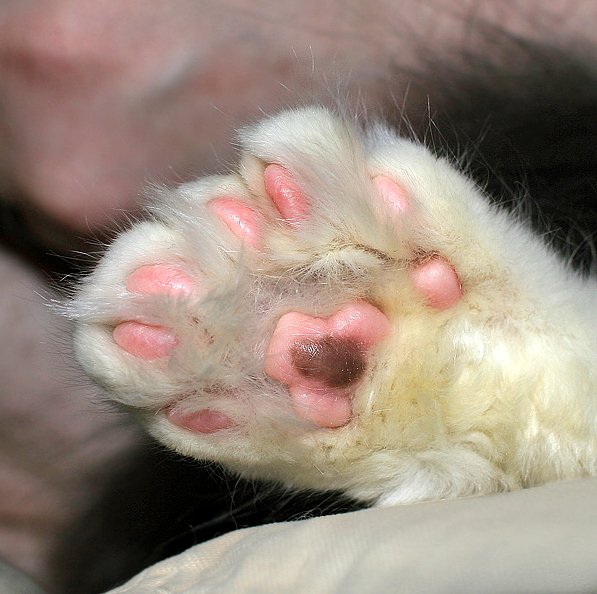
If so, as exotic as it may sound, the term simply means “cats with many digits.” In short, some kittens are born with more toes than other kittens. Also dubbed cats with thumbs, Hemingway cats and mitten cats, they have more than the typical 18 toes: five on each front paw and four on each back paw. This usually includes a dewclaw on each front paw, but not on the back.
When a polydactyl cat mates with a non-polydactyl cat, each kitten they produce has a 50% chance of inheriting the polydactyl gene and being born a polydactyl. If both parents are polydactyl cats, the likelihood of their offspring being polydactyl cats naturally increases.
The most common form of polydactylism is for one or two extra toes to form on the front paws, resembling thumbs or mittens. Less commonly, extra digits may form on the outside of the paw or in the middle. Since extra digits don’t always come in pairs, a cat’s paws could be asymmetrical. Two cats named Jake and Paws hold the record for the most toes on a cat — with seven digits on each paw, totalling 28 toes!
According to veterinary experts, it’s not fully understood why some polydactyl cats have only one additional toe while others have many. The origins of polydactyly in cats aren’t fully known either. It’s believed, though, that early sailors and settlers may have brought polydactyl cats with them to the Americas. Why? Their larger-than-normal paws would have made these polydactyl cats supremely skilled at catching rodents aboard ships.
Whatever benefits those extra toes might provide — such as enhanced balance, grip and hunting abilities — depend on the individual cat. Polydactylism isn’t considered a crucial adaptation for a cat’s survival in the wild. Most cats, regardless of the number of toes, are well adapted to their natural habitats.
Compared with other cat breeds, Maine Coons and Pixiebobs are the most likely to have extra toes. Although Maine Coons are famous for their large size and tufted ears, the presence of those extra toes adds to their unique appearance. And yet, any cat can be born with extra toes, depending on their genetic makeup and gene expression.
Have you ever heard of the so-called American Polydactyl? Far from being a breed, it refers to the descendants of polydactyl cats in Key West, Florida. Legendary novelist Ernest Hemingway, one of Key West’s most notable residents, was given a six-toed cat named Snow White by a ship’s captain in the 1930’s, who bred and passed on the polydactyly genes. Today, nearly 60 cats live on-site at The Ernest Hemingway Home and Museum in Key West, and although only 25 – 30 of them are polydactyl cats, all of them are considered descendents of Snow White.
While caring for polydactyl cats is similar to caring for other cats, keep these considerations in mind:
Since polydactyl cats have more nails (including some that may never touch the ground), they’re at an increased risk for overgrown nails. They can get snagged on certain surfaces, be extremely uncomfortable and even become infected. Regular nail trimming will help prevent these issues.
“Extra toes” means additional spaces between them where dirt, debris and/or kitty litter can accumulate. Inspect your cat’s paws regularly and wipe them clean as needed.
Unusually large or unique toe formations may negatively impact their mobility: they should be able to walk, run and jump without difficulty or pain. If you notice any limping, favoring of certain paws or changes in your cat’s mobility, consult your vet for further evaluation. Extra toes that cause problems can be surgically removed.
[ssba-buttons]