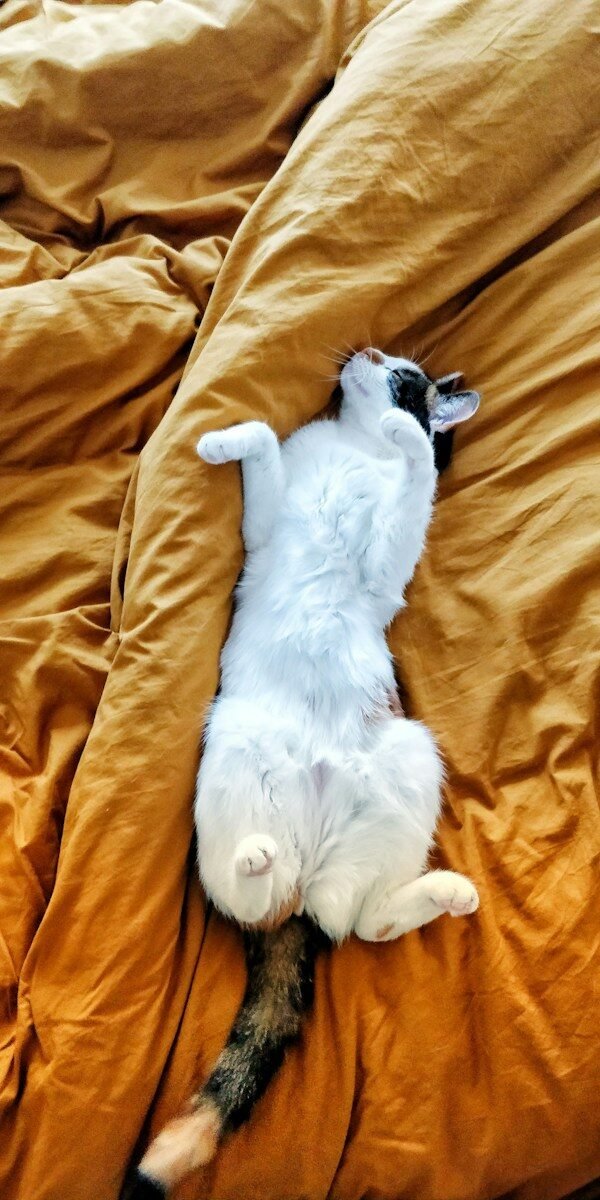
Have you ever given your kitty a loving, well-intentioned belly rub only to be met with a swat or a bite? Have you ever stopped and wondered why?
According to cat training behavior specialists, while it’s perfectly normal for some cats to dislike having their bellies rubbed, it’s by no means universal. Below are the most common reasons as to why some cats hate belly rubs.
The belly is a vulnerable area: From an evolutionary standpoint, the belly is an extremely vulnerable part of a cat’s body, and defending it was a survival tactic. Because of this, some cats might naturally find belly rubs to be either unpleasant or stressful.
They weren’t petted on their bellies as kittens: Socialization is vital for cats because it introduces them to different stimuli such as new people, other pets and strange places. This process helps them grow up to be more confident in countless situations and, in so doing, allows them to have more positive experiences. Therefore, if kittens were never exposed to being petted on their bellies, it could lead to a lifelong dislike – and distrust — of the sensation.
Their actions are misinterpreted: Just like people, cats have their own personal boundaries. Depending on the kitties, of course, they might trust you enough to show you their bellies, but this doesn’t necessarily mean that they’re “asking” for belly rubs. Cats often stretch out on their backs, extending their bodies as a relaxed gesture and not one of consent.
Their stomachs are supremely sensitive: In some cases, a cat’s reluctance to have her belly rubbed might be due to sensory overload. Why? Because a cat’s belly fur contains hypersensitive nerve endings, what feels like gentle petting to us can be overwhelming to them.
They might associate belly rubs with unpleasant experiences: Shy or fearful kittens can be particularly sensitive to what they feel are stressful events such as veterinary examinations or grooming sessions. The result is that these negative associations can cause them to dislike having their bellies rubbed even by their loving owners.
If you, as a pet parent, would like to train your own, reluctant kitty to enjoy belly rubs, these same experts advise that it might be possible if you use a gradual and respectful approach. They caution, however, that most cats who truly detest having their belly rubbed are highly unlikely to ever allow it or may need a considerable amount of time to warm up to the feeling.
If possible, start young: The social development window for a kitten is between three to seven weeks of age. During this time period, gently stroking your kitten’s belly can help her grow into an adult who enjoys that type of touch. This action is similar to that of a mother cat grooming her kittens’ bellies, thereby becoming a familiar – and pleasant –sensation early in their lives.
Incorporate counter-conditioning: Training an adult cat who already dislikes having her belly rubbed is far more challenging, but not impossible. Start with a single session, pairing a few light touches of your cat’s belly with her favorite, or new, high-value, treat to accustom her to your touch.
Use a gradual approach: Go slowly, work in short, frequent sessions and monitor her response to avoid overwhelming her, using the briefest stroke of a single finger and pairing it with a treat. You can also use clicker training to help acclimate your kitty to belly rubs.
Watch your cat’s reaction: A sign of success is your cat remaining relaxed, although not necessarily purring or soliciting more. Even if she grows to accept and like belly rubs, she may only tolerate brief and occasional tummy touches.
If, however, you’re training your cat and she starts ignoring the treat or shows signs of discomfort like flattened ears, a swishing tail or sudden stillness, stop immediately.
With enough time and training, some cats might eventually enjoy belly rubs. Regardless of the outcome, caution the experts, always honor your cat’s boundaries and never force contact to prevent defensive biting and above all, maintain the trust between you.