
Adult Cats and Sleep
by Nomi Berger
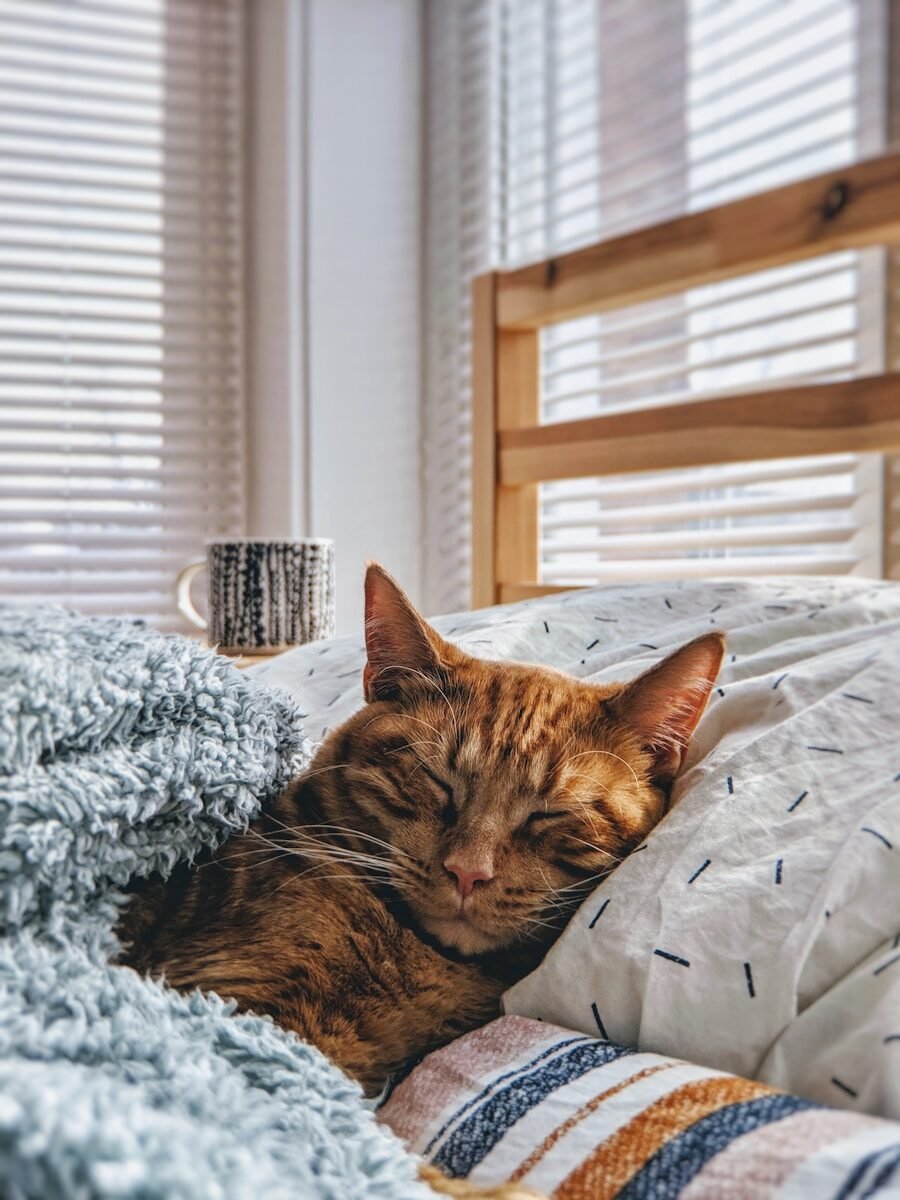
Our feline friends have a well-earned reputation for enjoying their slumber, but have you ever wondered how much your adult cat should actually sleep in a day?
Whereas kittens and younger cats typically need 20 hours or more of sleep a day, adult cats aged between 3 and 10 average between 13 to 16 hours of sleep a day. Bear in mind, however, that this is only an average. Just as some people require more “beauty sleep” than others do, some kitties will snooze more than others do.
While people tend to sleep in longer stretches at one time, cats have what we cleverly termed “catnaps” since they don’t sleep in eight-hour sessions as we do. Throughout each 24-hour period, they cycle in and out of naps, rotating rhythmically from light sleep to deep sleep and then to light sleep again.
Have you ever observed your sleeping cat’s whiskers moving and her eyelids twitching? This occurs during the light stage of her sleep cyle and she’s dreaming. In this stage, her senses remain finely tuned, enabling her to jump up and be alert far more swiftly than most people when an alarm goes off. Once your cat realizes that she’s not in danger, she can fall – safely – back to sleep again just as quickly as she awoke.
Should you notice, however, that your adult cat is sleeping more, it may be indicative of a medical problem. Adulthood is when many feline diseases such as chronic kidney disease begin to slowly develop, but any illness can cause a cat to retreat and spend more time asleep. Excessive sleeping can also be a sign that your cat’s in pain, perhaps from an issue like arthritis.
On the other hand, if your adult cat’s energy seems endless and she’s sleeping much less, she may be suffering from a condition like hyperthyroidism. This is a relatively common endocrine disease of middle-aged and older cats in which the thyroid gland produces excessive thyroid hormones. Along with hyperactivity, she may lose weight, vomit, have diarrhea, an increased appetite and be extremely thirsty. If any of these scenarios sound familiar, book a prompt appointment with your vet.
Hopefully, however, if your adult cat seems otherwise healthy, she will have long ago acclimated her sleeping habits to closely parallel your own. But should she begin waking you up frequently at night, consider the following suggestions to help improve her sleeping.
-
Maintain a strict schedule. If you’ve ever moved or travelled with cats, you already know that they’re creatures of habit who thrive on routine and predictability. Try then, as much as you possibly can, to keep your weekday and weekend bed times and wake times somewhat consistent.
-
Schedule daytime play. While interactive games top the list, if you’re not at home during the day, keep your cat constructively occupied with either cat treat toys or cat puzzle toys. Provide her with a cat tree or a sturdy window perch that affords her an engaging view of the outside world, whether it overlooks a nearby bird feeder, your yard or the street.
-
Feed her before bedtime. Since cats typically sleep soundest and best after a big meal, try feeding your cat her dinner meal right before your own, usual bedtime. If you free-feed her, ensure that she has access to her cat food at night since some night wakings on her part may simply be due to hunger.
-
Give her a quiet place to sleep. Whether it means that she’s curled up contentedly at the foot of your bed, snuggled safely beside you under the blankets or in another room altogether with her own comfortable cat bed, providing her with a cozy place to rest will help her sleep better at night.
-
Withhold all attention. Unless you suspect your cat is either ill or injured, don’t give her the attention she’s seeking. Should you interact with her after she meows and starts chewing on your hair at 2 AM, she’s achieved her goal! Every time you respond, you’re both rewarding and training her to keep up this pattern on as many subsequent nights as paws-ible.
[ssba-buttons]